Are you contemplating indulging in a remedial massage, sports massage, or deep tissue massage? While these therapies promise relaxation and muscle rejuvenation, it’s imperative to comprehend potential post-massage symptoms. Sometimes, individuals may encounter sensations resembling cold or flu symptoms post a massage session. These symptoms may include body aches, fatigue, dizziness, and a sense of being “out of it.” Let’s delve into the underlying reasons behind these symptoms and how to effectively alleviate them.
1. Pre-existing Illness:
Feeling under the weather before your massage? You might notice a magnification of symptoms afterward. Massages stimulate the lymphatic system, integral in combating infections. Enhanced lymphatic drainage post-massage aims to expel germs and toxins, potentially intensifying prevailing symptoms. It’s prudent to reschedule your massage if feeling unwell, thwarting further discomfort and contagion transmission.
2. Muscle Injury and Scar Tissue:
Renowned for targeting muscle knots and tension relief, deep tissue massages may lead to inflammation in individuals with underlying muscle injuries or scar tissue. As massage therapists endeavor to disband scar tissue, the body releases inflammation-fighting cells. This process may incite temporary discomfort, soreness, or even headaches. Open communication with your massage therapist regarding past injuries is pivotal, ensuring a tailored treatment plan.
3. Dehydration and Metabolic Waste:
Hydration’s pivotal in efficient waste elimination. Dehydration impedes this process, fostering metabolic waste buildup in the bloodstream. During a massage, therapists’ pressure can reintroduce waste into circulation, causing feelings of sickness. Adequate hydration pre and post-massage expedites toxin elimination, curbing post-massage symptoms.
4. Optimal Pressure and Comfort:
Effective communication with your massage therapist ensures a comfortable and beneficial experience. While discomfort during massages is normal, excessive pressure can induce tension and microscopic muscle tissue damage. If you’re tense or uncomfortable during the session, vocalize your concerns. Therapists can adjust pressure, fostering a positive outcome while minimizing post-massage symptoms.
Understanding potential post-massage symptoms and their origins empowers you to mitigate discomfort effectively. Prioritize health by rescheduling when unwell, communicate openly with therapists about injuries or preferences, and maintain hydration. By taking these proactive steps, you maximize massage benefits while minimizing temporary side effects.
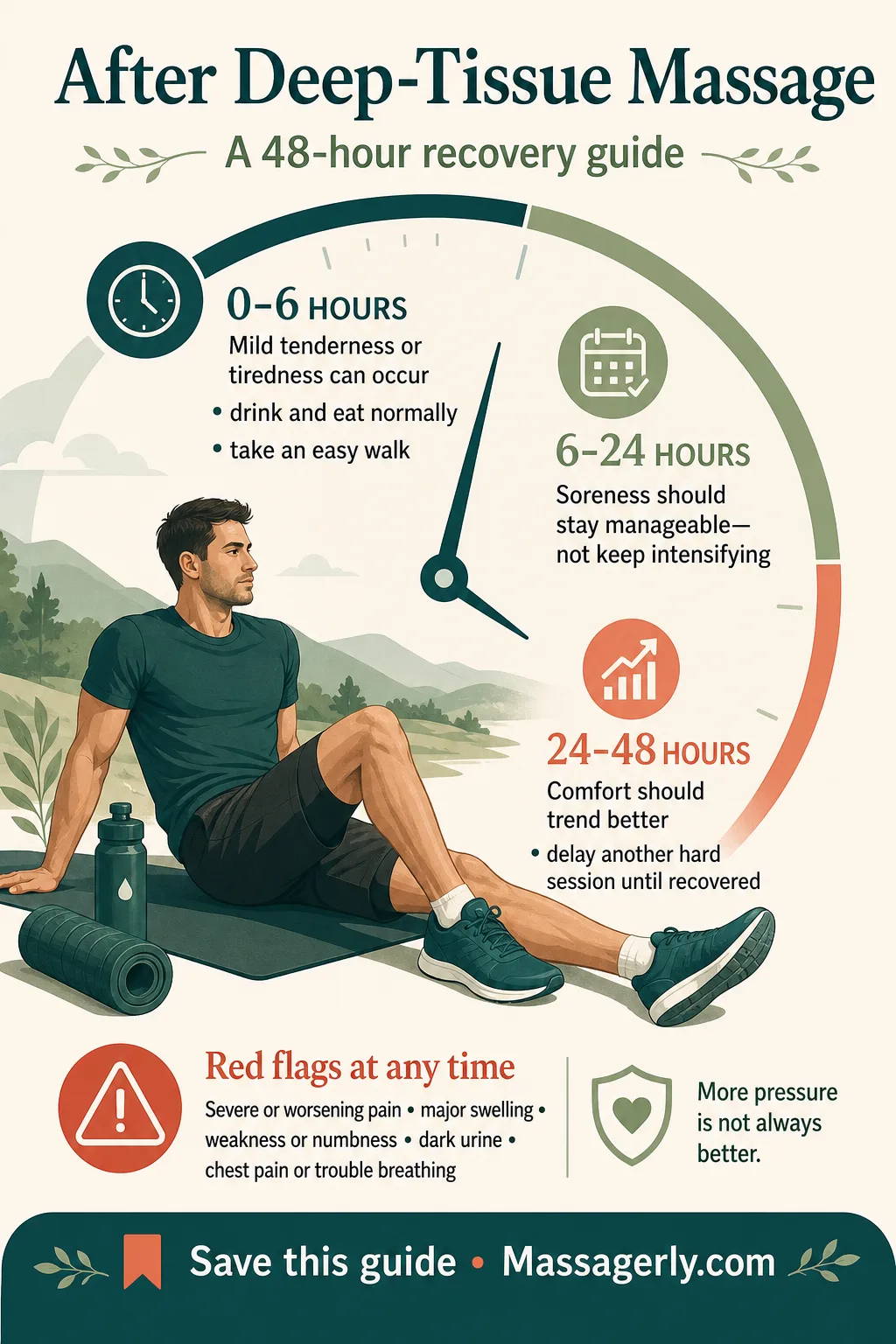
Practical decision table
| Time after massage | What may be reasonable |
|---|---|
| First few hours | Mild local tenderness or brief tiredness may occur; eat and drink normally |
| By the next day | Symptoms should be stable or improving, not spreading or becoming severe |
| 24–48 hours | Persistent or worsening illness deserves another explanation |
| Any time: fever, weakness, breathing trouble, dark urine or repeated vomiting | Seek prompt medical care |
What current research and guidance adds
- 2025 systematic overview of recovery therapies: The review discusses soreness outcomes after physical therapies; it does not support a massage-toxin illness mechanism.
- 2020 sports-massage review: Massage can modestly affect soreness in some exercise settings, but findings should not be generalized into a detox explanation.
Evidence applies to the population and method studied. It should not be stretched into a diagnosis, cure, detox claim or universal promise.
Questions readers also ask
Is this a detox reaction?
No reliable evidence shows that massage releases stored toxins and causes a flu-like detox illness.
Should I force extra water?
No. Drink normally unless a clinician has given different instructions.
Can deep pressure cause real injury?
Excessive pressure can cause bruising or significant muscle injury in rare cases, especially when warning pain is ignored.
When should I contact the therapist?
Report unexpected symptoms, but use medical care—not the therapist—to assess fever, neurological symptoms or serious illness.