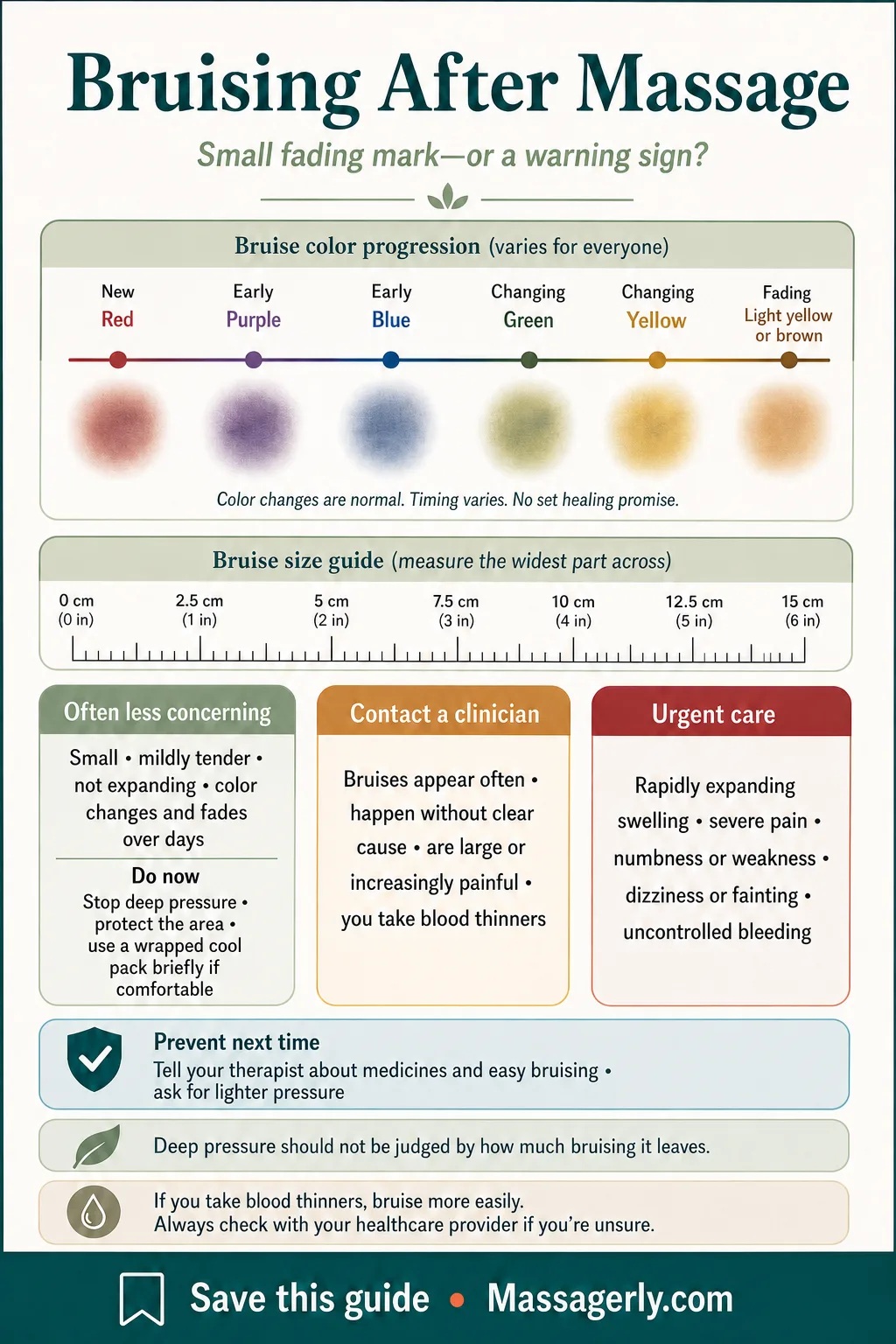
A small bruise can appear after firm or repeated massage pressure, but bruising is not required for a massage to “work.” A localized mark that is only mildly tender and steadily fades can usually be monitored at home. A large, rapidly spreading, very painful or unexplained bruise deserves medical advice—especially if you take a blood thinner or also feel weak, dizzy or unwell.
Quick answer: Stop massaging the area, use a wrapped cool pack for up to 15 minutes at a time, rest it and watch whether it improves. Seek urgent help for severe swelling or pressure, numbness, weakness, faintness, uncontrolled bleeding, or blood in urine, stool or vomit.
Bruising After Massage: What Is Normal and What Is Not?
| What you notice | What it may mean | What to do |
|---|---|---|
| One small, localized bruise that is mildly tender and fading | Minor soft-tissue injury from more pressure than the area tolerated | Stop pressure on it, use simple bruise care and monitor |
| A firm lump, increasing size, marked swelling or worsening pain | A larger collection of blood called a hematoma is possible | Contact a clinician promptly |
| Frequent bruises, bruises after very light touch or marks with no clear cause | A medicine, platelet problem or another medical condition may be involved | Arrange a medical review before another deep massage |
| Severe pressure, numbness, weakness, pale or cold skin beyond the bruise, faintness or unusual bleeding elsewhere | Potentially serious bleeding or pressure inside tissue | Get urgent medical help |
This is a practical triage guide, not a diagnosis. Bruise size alone cannot tell you everything; the trend, pain, swelling, medication history and other symptoms matter.
Why Can Massage Cause a Bruise?
A bruise forms when small blood vessels are damaged and blood leaks into tissue beneath the skin. That is why the color may move from red or purple toward green and yellow as the body clears it. The U.S. National Library of Medicine’s MedlinePlus bruise guide distinguishes bruises beneath the skin, inside muscle and around bone.
Massage may contribute when pressure is too forceful for the person or is repeated over one small area. Elbows, knuckles, scraping tools and percussion devices concentrate force more than broad, gentle hand contact. Recently exercised, injured or already tender tissue may tolerate less pressure.
Bruising does not prove that a knot, adhesion or “toxin” was released. It means blood vessels were injured. An effective session can happen without leaving a mark.
Soreness, a Bruise and a Hematoma Are Different
Post-massage soreness is a tender or worked feeling without visible discoloration. Our guide to being sore after a massage explains when ordinary discomfort should settle and which symptoms need more attention.
A bruise is visible discoloration caused by bleeding into tissue. It can be tender and may change color while healing.
A hematoma is a more substantial collection of blood. It may cause a raised or firm lump, pronounced swelling, deeper pain or pressure. You cannot reliably judge the depth of a suspected hematoma from a photograph, so a growing or very painful area should be assessed rather than massaged again.
What Research Says
Research does not give us a reliable percentage for how often ordinary massage causes bruising. Serious complications are described mostly in case reports, which can show what is possible but cannot tell us the risk for an average healthy person.
1. A rare thigh hematoma followed focused inpatient massage
A 2018 case report and literature review, Traumatic Complications of Inpatient Massage Therapy, described a 69-year-old hospitalized woman who developed severe thigh pain, swelling and extensive bruising after massage focused on a sore area. Imaging showed a large hematoma, and she needed blood transfusions.
Severe pain, major swelling, dizziness and collapse-like symptoms are not routine aftercare complaints. This was one medically complex hospitalized patient, so it does not prove that massage commonly causes major bleeding. It shows why intense pressure and worsening symptoms should never be dismissed.
2. Deep massage may worsen an already injured blood vessel
A 2020 report, Diagnosis of an Actively Bleeding Brachial Artery Hematoma, involved a 75-year-old woman who had acupuncture followed by deep shoulder massage. Her arm became increasingly red, swollen and painful. Ultrasound showed active bleeding beside the brachial artery. The authors believed an acupuncture needle may have injured the artery and that intense massage aggravated the injury.
Do not press deeply into a newly injured, punctured, swollen or rapidly bruising area. The case involved both acupuncture and massage, so it cannot blame massage alone.
3. A massage gun case showed that repeated force can go beyond skin bruising
In a 2021 case report, Rhabdomyolysis After the Use of a Percussion Massage Gun, a young woman developed thigh pain, multiple hematomas and tea-colored urine after cycling and percussion-gun treatment. She was diagnosed with severe muscle breakdown and treated in hospital.
A device can keep hitting tissue after your hands would naturally stop. New or worsening bruising is a reason to stop, not to increase the setting. This single case included exercise and underlying anemia, so it cannot estimate how often massage guns cause harm.
4. Anticoagulation can change the risk
A 2024 report, Portable Percussive Massage Device-Related Rectus Sheath Hematoma and Obstructive Uropathy, described a hospitalized man with several serious illnesses who was receiving anticoagulant treatment. A large abdominal-wall hematoma was associated with use of a deep-tissue percussion device.
Strong percussion over the abdomen is not a casual experiment, particularly when bleeding risk is already elevated. The patient had several major risk factors, so the case does not mean the same outcome is likely for a healthy user.
Who Is More Likely to Bruise?
- People taking anticoagulants or antiplatelet medicines. Warfarin, apixaban, rivaroxaban, dabigatran, heparin, aspirin and clopidogrel can make bruising or bleeding more likely. The NHS anticoagulant guide lists severe bruising among signs of excessive bleeding. Never stop a prescribed medicine for a massage; ask the prescriber or anticoagulation clinic what pressure is appropriate.
- People with a platelet or bleeding disorder. Low platelets, hemophilia and some liver, blood or autoimmune conditions can affect clotting.
- People using certain medicines or supplements. Steroids and some over-the-counter products may matter. Give the therapist an accurate medication and supplement list rather than guessing which items are harmless.
- Older adults or anyone with fragile skin and blood vessels. Pressure that felt acceptable years ago may no longer suit the tissue today.
- Anyone with a recent injury, injection, operation or cosmetic procedure. Follow the treating clinician’s restrictions. Do not treat an unexplained swollen area as a knot.
If one calf is newly swollen, hot, red or painful, do not massage it. Read our guide to whether massage can dislodge a blood clot and seek urgent medical assessment for possible DVT symptoms.
What to Do When You Notice a Bruise
- Stop pressure on the area. Do not try to “work it out” with another massage, foam roller, scraping tool or massage gun.
- Take a clear photo. Include the date and something for scale. A second photo later can show whether the edges are expanding.
- Use a wrapped cool pack. MedlinePlus recommends ice wrapped in a towel for up to 15 minutes at a time. Never place ice directly on skin.
- Rest and elevate when practical. Avoid strenuous use of a painful bruised muscle.
- Check your other symptoms. Increasing swelling, severe pressure, weakness, dizziness or bleeding elsewhere changes the situation.
- Ask before taking a pain reliever. Your medicine and medical history matter. A pharmacist or clinician can help you avoid a product that increases bleeding risk or conflicts with your treatment.
Do not puncture or drain a bruise yourself. For broader recovery advice, see what to do after a deep-tissue massage.
When to Contact a Clinician
Arrange prompt medical advice if the bruise is large, keeps growing, forms a firm lump, remains very painful, appears after light pressure, happens repeatedly or has no clear explanation. Also call if you take a blood thinner and develop substantial or unusual bruising.
Get urgent medical help for:
- severe or rapidly increasing swelling or pressure;
- numbness, weakness, loss of movement, or skin beyond the area becoming pale or cold;
- faintness, confusion, shortness of breath or a racing heartbeat;
- blood in urine, stool or vomit, black stool, or bleeding that will not stop;
- a severe headache or neurological symptoms after head or neck trauma;
- fever, spreading redness, pus or other signs of infection.
Extreme pressure inside a bruised limb can rarely threaten circulation and nerves. That is not something to watch overnight at home.
How to Prevent Bruising at Your Next Massage
- Tell the therapist about the bruise and how long it lasted.
- Share relevant medicines, supplements, bleeding conditions, recent procedures and previous blood clots.
- Ask for light pressure first and increase only while it remains comfortable.
- Speak up at sharp, burning, electric or escalating pain; you do not need to endure it for results.
- Avoid tools or repeated pressure directly over bones, visible veins, fresh injuries and existing bruises.
- If unexplained bruising is recurring, pause deep work until a clinician has reviewed it.
Frequently Asked Questions
Does bruising mean a deep-tissue massage worked?
No. Bruising means blood vessels were damaged; it is not evidence that toxins, knots or scar tissue were successfully removed. Pressure should be adjusted to your response.
How long should a massage bruise last?
There is no exact massage-specific timetable. An uncomplicated bruise should gradually become less tender and change or fade rather than keep expanding. Bruises can last from days to longer depending on their depth, size and the person’s health. Seek advice if the trend is worsening.
Can I massage directly over the bruise?
No. More pressure can irritate injured tissue and may worsen bleeding. Wait until the area has recovered, and get a medical opinion first if the bruise is large, unexplained, recurrent or unusually painful.
Should I stop my blood thinner before a massage?
Never stop or change a prescribed anticoagulant on your own. Tell the therapist and ask your prescriber or anticoagulation service about massage pressure and timing.
Is a circular mark after cupping the same thing?
Cupping intentionally uses suction and can leave circular discoloration. That does not make severe pain, blistering, spreading swelling or infection normal. This article focuses on bruising after hands-on or percussion massage rather than a complete cupping guide.
The Bottom Line
A small, improving bruise after firm massage can often be managed like another minor bruise, but it is still feedback that the tissue received more force than it tolerated. Bruising is not a treatment goal. Stop pressure, monitor the trend and use simple first aid.
Large or worsening bruises, firm swelling, severe pain, recurrent unexplained marks and symptoms of blood loss need medical attention. Recent reports show that serious hematomas after massage or percussion devices are possible but rare and usually described in people with additional risks. That is a reason for sensible screening and pressure—not panic.