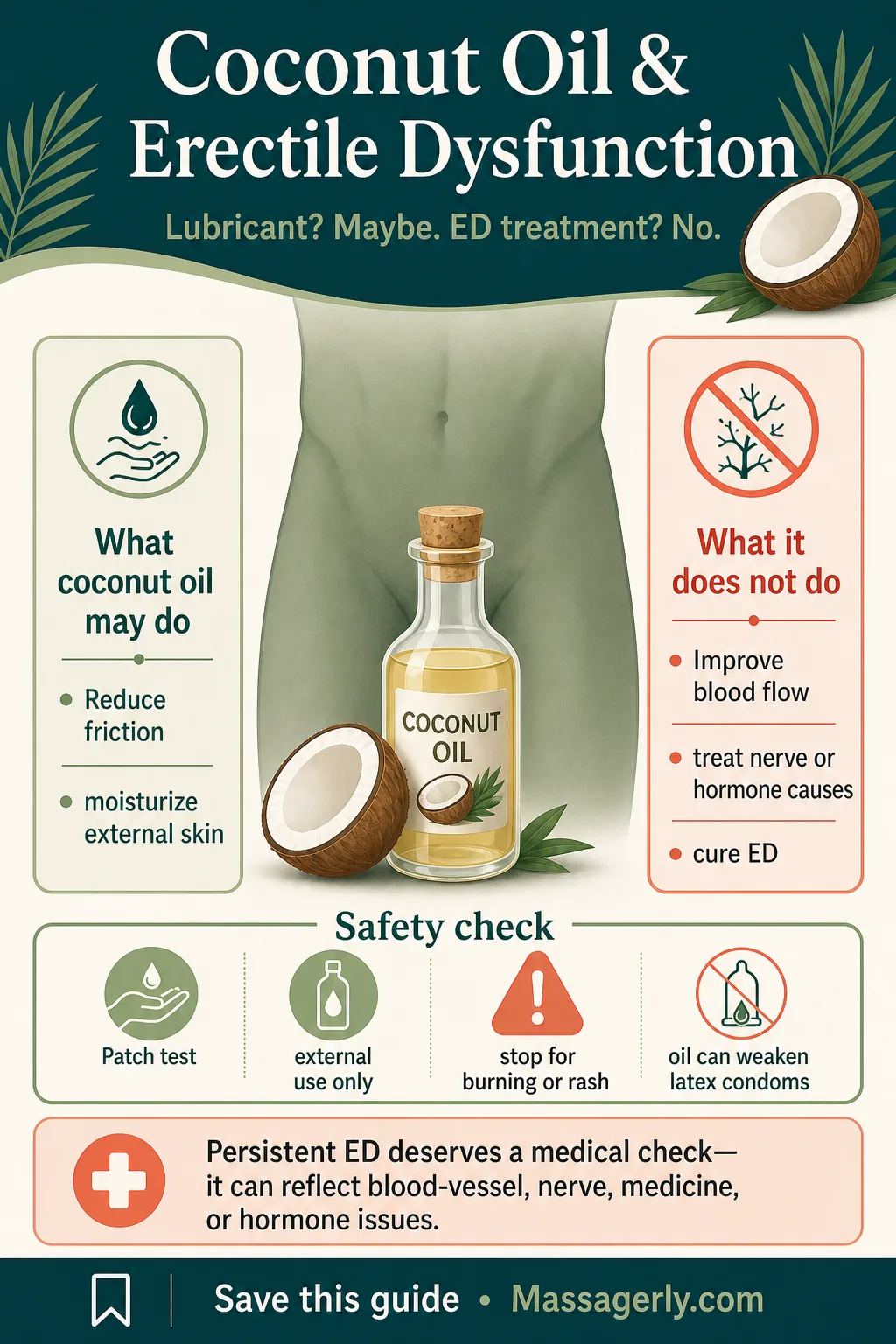
Erectile function is a health signal, not a simple circulation switch in the skin. A comfortable massage may support relaxation or intimacy, but an erection that is repeatedly difficult to obtain or maintain deserves cause-specific assessment.
Why massage is not an ED treatment
Pressure on the penis does not remove arterial disease, nerve injury, diabetes, medication effects or low testosterone. Relaxation may change the experience for some people, but that is not proof of restored blood-vessel function. Avoid claims that coconut oil increases sensitivity, regenerates tissue or permanently increases blood flow.
What coconut oil can do
A very small amount can provide external glide on intact skin. Patch-test first and stop for burning, itching, redness, swelling or pain. Do not put oil into the urethral opening. Choose a product with a complete ingredient list and avoid fragranced blends on genital skin.
Condom compatibility
Do not use coconut oil or another oil-based massage product with a latex condom or latex barrier. CDC guidance explains that oils can weaken latex and increase breakage risk. Use a lubricant whose label confirms compatibility with the specific barrier material.
Consent and pressure
External genital massage must be consensual, gentle and easy to stop. Pain, numbness, bruising, forceful bending or prolonged constriction are not therapeutic. Do not use massage to test or force erectile response.
When to seek medical advice
Arrange assessment when ED is persistent, new or worsening, especially with diabetes, cardiovascular risk, pelvic surgery, penile curvature, pain, reduced sensation or medication changes. Seek urgent care for a painful erection lasting about four hours, major injury, sudden severe testicular pain or chest symptoms.
A realistic decision table
| Goal | What massage may offer | What it cannot establish |
|---|---|---|
| Comfort | External glide and a slower routine | Treatment of persistent ED |
| Relaxation | A consensual calming context | Correction of vascular or nerve disease |
| Lubrication | Surface slip | Compatibility with latex barriers |
What current evidence says
The CDC’s safer-sex guidance says oil-based products should not be used with latex condoms because they can weaken the material. Persistent ED is evaluated by cause; coconut oil is not included as an evidence-based ED therapy.
Related Massagerly guides
For application safety, read penile massage with coconut oil, how to patch test an oil, skin risks of coconut oil and sensitive-skin oil choices.
Why persistent ED deserves a real assessment
Erectile dysfunction can relate to cardiovascular risk, diabetes, medicines, nerve conditions, hormone problems, pelvic treatment, sleep, anxiety or relationship factors. A topical oil cannot identify or correct those causes. The American Urological Association guideline uses a diagnostic and shared-decision approach; coconut-oil massage is not listed as an ED treatment.
What external massage may reasonably offer
With consent, gentle touch may support relaxation, communication and comfortable lubrication for intact external skin. Those are intimacy outcomes, not proof of improved erectile physiology. An erection that occurs during relaxed touch does not demonstrate that coconut oil treated the underlying condition.
External-use safety checklist
- Confirm consent and stop immediately if either partner wants to stop.
- Keep pressure light; do not squeeze, bend or attempt to “break up” tissue.
- Do not use on a rash, ulcer, unexplained lump, open skin or active infection.
- Keep oils out of the urethral opening.
- Use a condom-compatible lubricant when a barrier is needed.
- Wash off the product if burning, swelling or persistent irritation develops.
When to obtain care
Arrange a clinical assessment when ED persists, recurs or is accompanied by reduced libido, penile curvature, pain, urinary symptoms or a major change in health. Sudden severe genital pain, trauma, marked swelling, discoloration or an erection lasting about four hours requires urgent care.
Questions readers often ask
Does massage increase penile blood flow enough to treat ED?
Touch can be associated with arousal, but that is not evidence that oil massage corrects vascular ED. Do not substitute it for assessment of persistent symptoms.
Is coconut oil safe with condoms?
Not with latex unless the manufacturer specifically says otherwise. Oil can weaken latex. Water- or silicone-based lubricant is usually the safer match for latex barriers.
Can oil reverse Peyronie’s disease?
No. Do not forcefully massage curvature or a plaque. Pain, new curvature or difficulty with intercourse should be assessed by a urology professional.
Avoid turning intimacy advice into medical advertising
Product pages and social posts often combine true statements about lubrication or relaxation with unsupported claims about blood vessels, testosterone or tissue repair. The first statement does not prove the second. When reviewing an oil, ask whether the claimed outcome was actually measured in people with diagnosed ED, whether there was a comparison group and whether the ingredient and dose match the product being sold.
Partners can still use comfortable touch as part of intimacy without calling it treatment. Keep expectations clear, protect consent, use compatible contraception or infection-prevention barriers, and seek qualified care when function changes persist. This approach avoids both unnecessary fear and false reassurance.
Saveable visual summary