The inner thigh contains the hip-adductor muscles that help draw the leg inward and stabilize it during walking, turning and side-to-side movement. These muscles can feel tight after unfamiliar exercise, prolonged sitting or sport, but tightness is not proof of poor circulation, “toxins” or tissue that must be broken up.
Inner thigh massage should feel calm and controlled. It should never involve pressure in the groin crease, surprise contact or an assumption that stronger pressure produces a better result. This guide explains what the available research can support, how to use gentle techniques and which symptoms should stop the session.
What inner thigh massage may—and may not—do
The most relevant recent research concerns foam rolling and self-massage rather than professional hands-on massage. In a 2020 randomized crossover study, a 60-second hip-adductor foam-rolling session produced a small immediate change in passive groin flexibility without reducing measured strength. The participants were healthy volunteers, so the result does not establish treatment for an injury, chronic pain or a medical condition.
That evidence supports a modest conclusion: controlled self-massage may temporarily change how flexible or relaxed the area feels. It does not show that inner thigh massage permanently lengthens muscle, removes knots, improves whole-body circulation, releases hormones or prevents injury. Comfort also varies; some people will not find this area relaxing at all.
Reasonable goals
- Short-term comfort after ordinary muscle use.
- A gentle warm-up before comfortable movement or stretching.
- Learning which pressure feels acceptable without provoking pain.
- Relaxation when the person actively wants this area included.
Claims to treat cautiously
- Massage does not “detox” the inner thigh or flush harmful material from it.
- A temporary range-of-motion change is not proof that an injury has healed.
- Local warmth after rubbing is not evidence that a circulation disorder has been treated.
- Painful pressure is not required to release fascia or make the technique effective.
Consent and draping come first
The inner thigh is a sensitive area close to the groin. A massage therapist should explain why the area is being considered, describe where contact will stop and obtain clear permission before beginning. Consent remains reversible: a person can change their mind or ask for less pressure at any point.
For self-massage, keeping shorts or underwear on creates a clear boundary and makes it easier to stay on the muscle belly. In a professional setting, secure draping should expose only the area being worked on. Contact should remain away from genital tissue and the groin crease. If the purpose, boundary or draping is unclear, pause before continuing.
Four gentle inner thigh massage techniques
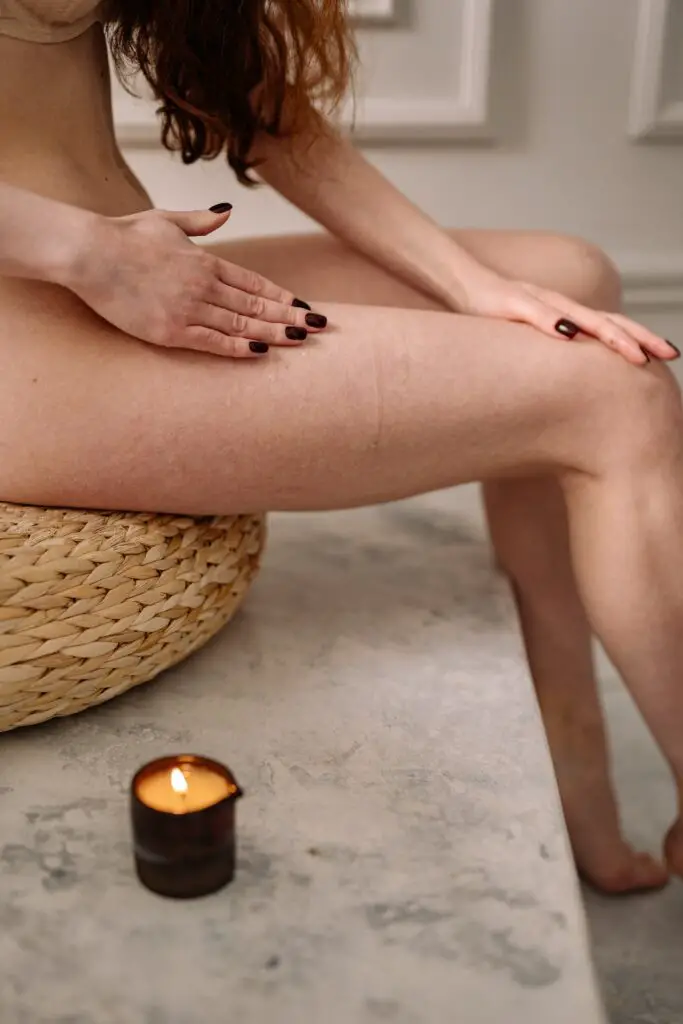
Choose a comfortable seated or supported lying position in which the leg can relax without being forced outward. Start over clothing if direct skin contact feels too sensitive. Use a small amount of plain massage oil only when needed for glide, and keep the surface dry enough to control your hands.
1. Broad gliding strokes
Place a relaxed palm on the muscular part of the inner thigh above the knee. Glide slowly upward, stopping well before the groin crease, then reduce pressure on the return. Use the whole hand instead of digging with fingertips. Repeat three to five times while checking comfort.
2. Gentle palm compression
Rest the palm over the muscle and apply light, even pressure for two or three seconds. Release completely before moving to another spot. Compression should feel broad rather than sharp. Avoid pressing directly over visible veins, bruises, a lump or an area of unexplained tenderness.
3. Slow kneading of the muscle belly
With the thigh relaxed, gently lift and roll a small amount of muscle between the palm and fingers. Keep the movement slow and shallow. Reduce pressure immediately if the sensation becomes pinching, electric, burning or numb.
4. Massage followed by comfortable movement
After one or two minutes of light work, slowly bring the leg toward and away from the midline within an easy range. Do not force a wide stretch. Massage and stretching can both produce temporary range-of-motion changes, but adding more intensity does not guarantee a better result.
How much pressure and how long?
There is no evidence-based universal dose for inner thigh massage. For self-massage, one to three minutes of light work on each side is a sensible trial. Stop sooner if the area becomes more painful or sensitive. A professional session may differ according to the person, purpose and clinical context.
Pressure should remain easy to tolerate while breathing normally. Mild tenderness that settles when pressure is reduced can be a cue to work more gently. Sharp, burning, electric or numb sensations are stop signals—not evidence that a knot is releasing.
When inner thigh pain needs assessment instead
Not every inner thigh symptom is muscular. A new groin or inner-thigh injury, pain that affects walking, a palpable lump, significant bruising, numbness or symptoms that keep worsening deserve appropriate assessment before massage.
Do not massage one-sided swelling, warmth, redness or unexplained tenderness. The CDC lists swelling, pain or tenderness, warmth, and redness or discoloration among possible signs of deep-vein thrombosis. These symptoms cannot be confirmed or ruled out by touch. Seek prompt medical care; chest pain, sudden shortness of breath, coughing blood, fainting or a rapid heartbeat require emergency help.
Also avoid massage over broken or infected skin, a fresh strain, a painful varicose vein or an area where a clinician has advised against pressure. People taking anticoagulants or bruising easily may need gentler pressure and individualized guidance.
A simple session checklist
- Confirm that massage is wanted and agree on the upper boundary.
- Check for swelling, redness, heat, bruising, skin injury or a new lump.
- Support the leg so the inner-thigh muscles can relax.
- Begin with broad contact and light pressure.
- Stay on the muscle belly and away from the groin crease.
- Recheck comfort whenever moving higher or changing technique.
- Stop for sharp pain, numbness, burning, swelling or withdrawal of consent.
Bottom line
Inner thigh massage can be an optional comfort practice, not a medical treatment. The best approach is brief, broad and gentle, with explicit consent and secure boundaries. Research supports only modest, short-term changes in flexibility from related self-massage methods. Warning signs such as one-sided swelling, warmth, redness or unexplained pain should be assessed rather than massaged.
Quick Comparison
| Sensation | Meaning | What to do |
|---|---|---|
| Comfortable pressure or mild stretch | Usually acceptable | Check consent and continue slowly |
| Tender but easing | Pressure may be near the limit | Reduce pressure and reassess |
| Sharp, burning, electric or numb | Possible nerve or tissue irritation | Stop immediately |
| One-sided heat, redness or swelling | Possible medical problem including DVT | Do not massage; seek assessment |
What Recent Research Says
What the study found: In a 2020 randomized crossover study of hip-adductor foam rolling, a single 60-second session produced a small immediate improvement in groin flexibility without reducing strength. It studied healthy volunteers and foam rolling—not deep hands-on work or injury treatment.
What the study found: In a 2021 randomized pilot trial of self-massage methods, different rolling methods temporarily increased range of motion and perceived relaxation, with measurements trending back toward baseline within 15 minutes. That supports short-term effects, not permanent tissue ‘release.’
The evidence is useful only within the population and method that researchers tested. It should not be stretched into a cure, detox claim or universal promise.
Practical Safety Checklist
- Ask permission before approaching the inner thigh and again before moving higher.
- Keep underwear or shorts on for self-massage and use secure professional draping.
- Use broad contact instead of digging with fingertips.
- Stay on the muscle belly and away from the groin crease.
- Stop for bruising, numbness, sharp pain, swelling or a request to stop.
Questions People Also Ask
Why would someone massage the inner thigh?
The adductor muscles work during walking, side-to-side movement and sport. Gentle massage may feel relaxing or temporarily change range of motion, but it is not necessary for everyone.
Is inner-thigh massage supposed to hurt?
No. Strong discomfort is not proof that a technique is working. Sharp, burning, electric or numb sensations are stop signals.
Can you massage a painful inner-thigh lump?
No. A new lump, one-sided swelling, heat, redness or unexplained pain should be medically assessed before massage.
Continue Reading
Related Massagerly guides: whether massage should hurt, bruising after massage, blood-clot and DVT massage safety, soreness after massage, nerve-pain warning signs, aftercare for deeper massage.
